

Table of Contents
- Why Verifying Precious Metals Matters
- What You'll Need Before Testing
- How to Test Gold and Silver at Home
- Reading a Precious Metal Hallmark Guide
- Choosing the Best Precious Metal Tester
- When to Use Professional Precious Metal Testing
- Decision Tree: Testing by Item Type and Value
- Common Testing Mistakes and Limitations
- Frequently Asked Questions
Last Updated: October 7, 2026
Why Verifying Precious Metals Matters
Counterfeit precious metals cost buyers billions annually. When you invest in gold, silver, or other valuable metals, authenticity directly determines what you own and what it's worth. A piece that looks like solid gold might be gold-plated. A silver coin could be a clever fake. These differences matter enormously, especially if you're purchasing heirloom pieces or investment-grade bullion.
At Glamorous by Katre, we understand this concern deeply. Our clients want confidence that their pieces are genuine, crafted with real precious metals, and built to last a lifetime. That's why we've created this guide to help you verify authentic precious metals through practical, non-destructive testing methods.
Knowing how to test precious metals gives you power as a buyer. You can spot obvious fakes immediately. You can feel confident about your purchases. And you understand exactly what you're bringing home.
What You'll Need Before Testing
Most precious metal verification starts with items you already have at home. You don't need expensive equipment to run initial checks.
Basic testing supplies:
- A strong magnet (neodymium magnets work best)
- A scale that measures in grams
- A ruler or caliper for measurements
- White vinegar or lemon juice
- A ceramic tile or unglazed porcelain
- A reference guide for known specifications
- A magnifying glass or jeweler's loupe
Optional but helpful:
- A precise digital scale (accurate to 0.1 grams)
- Calipers for exact diameter and thickness measurements
- A sound recording app on your phone for ping tests
- Reference samples of known authentic pieces
Start with what you have. A magnet and a scale solve most questions. If you need deeper verification, you can move to professional testing later.
How to Test Gold and Silver at Home
Testing precious metals at home relies on understanding their physical properties. Gold and silver behave differently than base metals. These differences are measurable without damaging the piece.
Visual Inspection and Discoloration Checks
Start by looking closely at the piece. Real gold and silver show specific visual characteristics that fakes often miss.
Examine the color carefully. Genuine gold has a warm, consistent hue. Fake pieces often show color variation or a brassy tone that looks slightly off. Silver appears bright white with a subtle luster.
Look for plating wear. If you see a different metal showing through at edges or high-contact areas, the piece is plated, not solid. This matters for value.
Check the base of rings and the backs of pendants. Manufacturers often leave these areas unfinished. You'll see the true metal composition there. If the back looks cheap or different from the front, that's a red flag for heavy plating.
Use a magnifying glass to inspect joints and seams. Real precious metal work shows clean, consistent craftsmanship. Sloppy soldering or rough edges suggest lower quality or counterfeiting.
Magnet Testing and Its Limitations
Magnets reveal a lot about precious metals, but they have important limits.
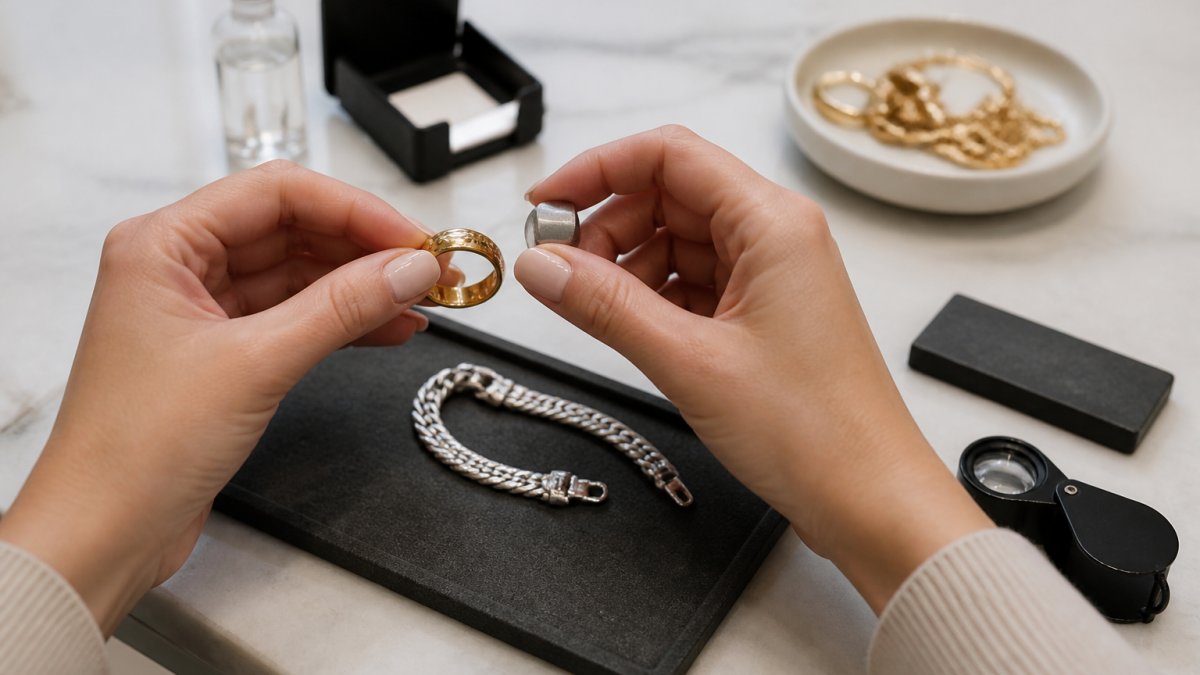
Real gold and silver are not magnetic. If a strong magnet pulls hard on a piece, it contains iron or other ferrous metals. That means it's not pure gold or silver.
Place a neodymium magnet near the piece without touching it. Strong attraction means the piece contains magnetic metals. Weak or no attraction is what you want for genuine precious metals.
Here's the critical limitation: some counterfeit pieces use non-magnetic base metals like copper or brass. A magnet won't catch these fakes.
Also, gold-plated pieces over copper or brass will pass a magnet test even though they're plated, not solid. The magnet pulls on the base metal underneath.
Use magnets as a first screening tool. If a piece fails the magnet test, it's definitely not solid precious metal. If it passes, keep testing with other methods.
Weight, Density, and Dimension Comparisons
Weight and density reveal whether a piece matches what it should be.
Find the known specifications for your item. Coins and bullion bars have published weights. Jewelry pieces can be compared to similar authentic examples.
Weigh your piece on a precise digital scale. Compare the result to specifications. If your "gold" coin weighs 25 grams instead of 31.1 grams, something is wrong.
Measure dimensions with calipers. Diameter and thickness matter. Counterfeit coins often have slightly different dimensions than genuine ones. A fake might be 0.5mm thinner or 1mm smaller in diameter.
Calculate density if you want to be thorough. Gold has a density of 19.3 grams per cubic centimeter (Reference Tables | NIST). Lead is 11.3 grams per cubic centimeter (Composition of LEAD).
This test requires precision but gives definitive results. Weight and dimension checks catch many counterfeits that pass visual inspection.
Sound and Ping Tests
Real precious metals produce distinctive sounds when struck lightly.
Hold a piece lightly in your hand and tap it gently with another metal object. Listen carefully to the tone. Genuine precious metal coins and bars produce a clear, bell-like ring that sustains for several seconds. Counterfeit pieces often sound dull or flat.
Silver produces a higher-pitched ring than gold. Gold sounds deeper and warmer. Base metals sound harsh or tinny.
Record the sound on your phone if you want to compare it later. Play it back and listen for that sustained, clear tone.
The limitation: sound testing requires experience. Without hearing genuine pieces first, you might not recognize the difference. Also, the shape and thickness of a piece affect its sound. A thick coin rings differently than a thin one.
Use sound testing alongside other methods. It's a helpful screening tool but not conclusive on its own.
Reading a Precious Metal Hallmark Guide
Hallmarks and stamps tell you what you're looking at. Learning to read them is essential.
Common hallmarks for gold:
- 24K or 999: Pure gold (99.9% minimum)
- 18K or 750: 75% gold, 25% other metals
- 14K or 585: 58.5% gold, 41.5% other metals
- 10K or 417: 41.7% gold, 58.3% other metals
Common hallmarks for silver:
- 999 or .999: Pure silver (99.9% minimum)
- 925 or Sterling: 92.5% silver, 7.5% other metals
- 900 or Coin Silver: 90% silver, 10% other metals
- 800: 80% silver, 20% other metals
Look for these stamps on the inside of rings, the back of pendants, or the edge of coins and bars. They're usually small but clearly marked.
Hallmarks from reputable assayers carry weight. If you see a hallmark from a recognized testing house, the piece has been professionally verified.
Beware of fake hallmarks. Counterfeiters stamp their pieces with false markings. Compare the stamp quality to known genuine pieces. Real hallmarks are crisp and consistent. Fake ones often look rough or uneven.
Research the maker's mark if one is present. Luxury brands and established jewelers have recognizable stamps. Unknown marks don't mean fake, but they deserve extra scrutiny.
Choosing the Best Precious Metal Tester
When home testing isn't enough, professional equipment provides certainty.
Acid test kits use chemical reactions to identify metal composition. You scratch the piece slightly and apply acid. Different metals react differently. The color change tells you what you're dealing with.
X-ray fluorescence (XRF) testers scan the surface and identify metal composition without damage. They're non-destructive and accurate. Professional jewelers and precious metal dealers use these regularly. Cost ranges from hundreds to thousands of dollars.
Ultrasonic testers measure thickness of plating and detect voids or inconsistencies inside the piece. They're useful for identifying heavily plated fakes. These also run several hundred dollars.
Sigma Metalytics machine uses electromagnetic technology to verify precious metal content and purity. It's one of the most reliable at-home options, but it costs over a thousand dollars.
For occasional buyers, acid test kits offer the best value. For serious collectors or dealers, professional XRF testing is worth the investment.
When to Use Professional Precious Metal Testing
Some situations demand professional verification. Know when to call in an expert.
Use professional testing when:
- The piece is valuable (over $500 or significant sentimental worth)
- You're buying from an unfamiliar seller
- The piece shows conflicting test results at home
- You need certification for insurance purposes
- The piece is rare or historically significant
- You're making an investment purchase
Professional testers have advanced equipment and trained eyes. They catch subtle fakes that home tests miss. They also provide documentation of authenticity, which matters for resale or insurance.
Find a certified precious metal tester through professional organizations. Ask for credentials and experience. Reputable testers belong to industry associations and follow strict protocols.
Expect to pay $25-100 per item for professional testing, depending on complexity. It's worth the cost for valuable pieces.
Decision Tree: Testing by Item Type and Value
Different items need different approaches based on what they are and what they're worth.
Coins and bullion bars ($100-1,000+): Start with magnet test and weight check. If both pass, measure dimensions. If dimensions match, the piece is likely genuine.
Jewelry under $200: Visual inspection and magnet test catch most problems. If you want more certainty, use an acid test kit.
Jewelry $200-500: Run magnet, weight, and dimension tests. Use an acid test kit if available. Consider professional testing if results are unclear.
Jewelry over $500: Always get professional XRF testing. The cost is small compared to the piece's value. Professional documentation protects you and adds resale value.
Vintage or antique pieces: Professional testing is essential. Age and origin affect value significantly. A certified appraisal is worth the investment.
Inherited or gifted pieces: If you don't know the source, professional testing gives you confidence. It also helps with insurance documentation.
Common Testing Mistakes and Limitations
Understanding what doesn't work prevents wasted effort and false conclusions.
Mistake: Relying on magnet tests alone. Magnets only detect ferrous metals. Many counterfeits use non-magnetic base metals that pass magnet tests.
Mistake: Trusting appearance over measurement. Counterfeiters have gotten skilled at making fakes look authentic. Visual inspection alone isn't enough. Weigh and measure everything.
Mistake: Ignoring hallmarks. Hallmarks provide crucial information, but they can be faked. Verify hallmarks by researching the maker and comparing to known examples.
Mistake: Testing plated pieces as if they're solid. Plated jewelry has a layer of precious metal over a base.
Mistake: Assuming older means authentic. Age doesn't guarantee authenticity. Old counterfeits exist. Use the same testing methods for vintage pieces.
Test limitations to remember:
- No single home test is 100% conclusive
- Sound tests require experience to interpret correctly
- Acid tests leave marks on the piece
- Magnets don't catch non-magnetic fakes
- Visual inspection can be fooled by skilled counterfeiting
Combine multiple testing methods. If results conflict, seek professional verification. When in doubt, get a professional opinion before making a purchase or significant investment.
Buying precious metals with confidence starts with verification.
Frequently Asked Questions
How can you check if gold is authentic at home?
Start with visual inspection: genuine gold shows consistent color with no discoloration or green tarnish typical of gold-plated items. Check for hallmarks (karat stamps like 14K or 18K). Perform a magnet test, real gold is non-magnetic, so it should not stick to a strong magnet. Weigh the item against known specifications for its type; gold is dense, so counterfeit pieces often feel too light. For conclusive verification, professional testing is safest, especially for high-value pieces.
What is the best home-use precious metal tester for gold and silver?
Digital precious metal testers using electrical conductivity measure how well the metal conducts electricity, which differs between gold, silver, and counterfeits. Avoid acid test kits unless you're experienced; they can damage jewelry. Magnet tests are free but limited, they only rule out ferrous metals. For definitive results on valuable pieces, professional X-ray fluorescence (XRF) testing or assay services provide non-destructive verification without risk to your jewelry.
Can a magnet test tell you whether gold or silver is real?
A magnet test can rule out fake bullion and heavily plated items, but it has serious limitations. Real gold and silver are both non-magnetic, so they won't stick to a magnet. However, some counterfeits use non-magnetic metals, so a negative result doesn't guarantee authenticity. Additionally, if jewelry contains magnetic metals in its base or alloy, it may stick to a magnet even if the plating is genuine. Use magnet testing as a first screening step only, not as conclusive proof.
When should you have precious metals tested by a professional?
Seek professional testing for high-value items (over $500), inherited or antique pieces with unclear provenance, rare bullion coins or rounds, and jewelry you plan to resell or insure. Professional methods like XRF (X-ray fluorescence) and assay testing are non-destructive and provide certification. They identify exact purity, fineness, and metal composition. Pawn shops and certified precious metal dealers offer testing services; choose one accredited by industry standards to ensure accurate, trustworthy results.