

Table of Contents
- Understanding Jewelry Luster and Why It Matters
- Daily Wear and Tear Prevention
- Safe Jewelry Cleaning Methods at Home
- How to Store Fine Jewelry to Prevent Tarnishing
- Handling Delicate Gemstones and Pearls
- Professional Jewelry Cleaning Frequency
- Maintaining Luster Across Different Metals and Gemstones
- Conclusion
- Frequently Asked Questions
Last Updated: September 30, 2026
Understanding Jewelry Luster and Why It Matters
Jewelry luster refers to the way light reflects off a gemstone or precious metal surface, creating that distinctive shine and brilliance that draws people to fine pieces in the first place. When you maintain fine jewelry luster, you're preserving not just the visual appeal but also the long-term value and wearability of your investment.
The difference between a piece that sparkles and one that looks dull often comes down to daily care habits. Luster deteriorates through oxidation, chemical exposure, and accumulated residue, all preventable with the right approach. Maintaining fine jewelry luster isn't complicated; it requires consistency and knowledge about what actually works versus what damages your pieces.
Brilliance fades when gemstones become clouded with oils, dust, and microscopic particles. Precious metals tarnish when exposed to moisture and certain chemicals. The good news is that both issues respond well to proper maintenance. Understanding why your jewelry loses its glow is the first step toward keeping it beautiful for a lifetime.
Daily Wear and Tear Prevention
The easiest way to maintain fine jewelry luster is preventing unnecessary damage before it happens. Daily wear exposes your pieces to countless threats: hand lotions, perfumes, sweat, and environmental pollutants all contribute to dullness and corrosion over time.
Remove jewelry before applying skincare products, cosmetics, or fragrances. These substances create a film on gemstones and metals that dulls their appearance and can damage delicate settings. Many people don't realize that lotions and perfumes are among the most common culprits behind tarnishing and loss of brilliance. The oils in these products interact with precious metals and can accelerate oxidation.
Avoid exposing your pieces to chlorine, which corrodes metals and can damage gemstone coatings. Remove jewelry before swimming, showering, or cleaning. Even brief exposure to harsh chemicals can initiate corrosion that becomes visible within weeks. If you wear jewelry while exercising, the combination of sweat and friction accelerates wear on settings and can loosen stones.
Store pieces separately to prevent scratching. Harder gemstones like diamonds can scratch softer ones, and metal-on-metal contact causes micro-abrasions that accumulate over time. Separate storage also reduces the risk of tangling, which puts stress on delicate chains and settings.
Handle jewelry gently and avoid unnecessary contact with your hands throughout the day. Skin oils transfer to surfaces, creating residue that clouds gemstones and dulls metal patina. When you do need to handle pieces, use clean hands or a soft microfiber cloth as a barrier.
Safe Jewelry Cleaning Methods at Home
Regular cleaning is essential to maintaining fine jewelry luster, but method matters enormously. The wrong approach can damage settings, scratch gemstones, or dull finishes irreversibly.
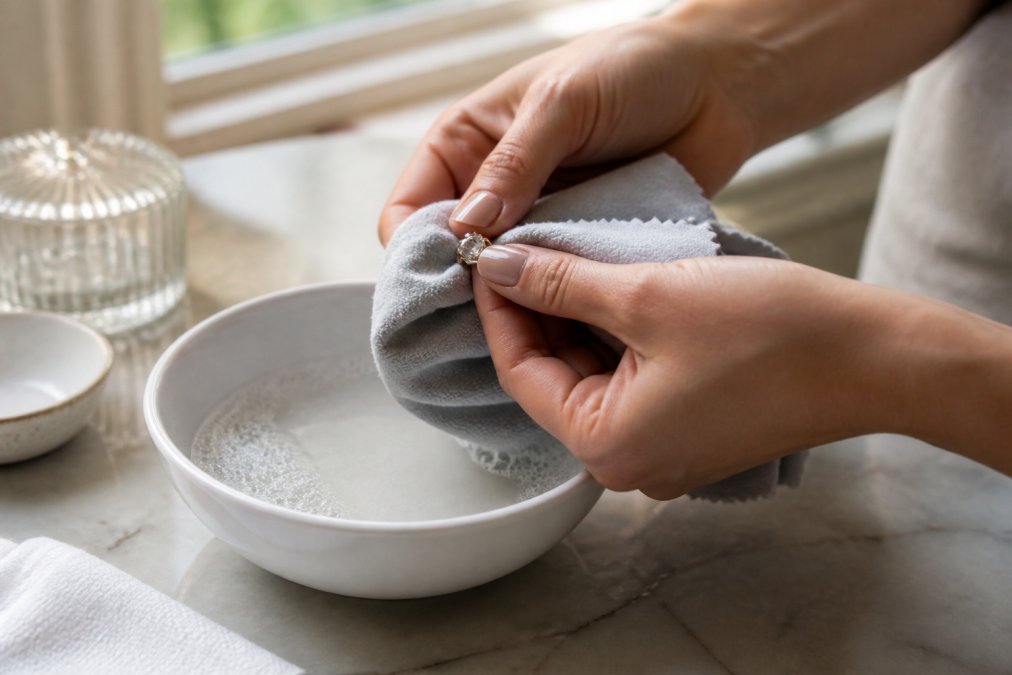
The safest home cleaning method uses warm water, mild detergent, and a soft-bristled brush. Fill a small bowl with lukewarm water and add a few drops of gentle dish soap. Soak your jewelry for 10-15 minutes to loosen surface residue. Use a soft-bristled brush, never abrasive pads or harsh scrubbers, to gently clean around settings and crevices. Rinse thoroughly under running water and pat dry immediately with a microfiber cloth.
For delicate pieces, skip the brush entirely. Instead, use the soapy water soak followed by gentle wiping with a microfiber cloth. This removes oils and light residue without risk to vulnerable settings or soft gemstones.
Avoid ultrasonic cleaners for pieces with delicate settings or porous gemstones (Ultrasonic Cleaners for Gems: What You Need to Know). While ultrasonic technology works well for strong metal pieces, the vibrations can loosen stones or damage fragile settings. If you own an ultrasonic cleaner, use it only for solid metal pieces without gemstones.
Never use abrasive materials or harsh chemicals. Avoid toothpaste, baking soda pastes, vinegar, and commercial jewelry cleaners unless you're certain they're safe for your specific metals and gemstones. These substances can scratch surfaces, damage protective coatings, and cause chemical reactions that permanently alter appearance.
For tarnished silver, a specialized silver cloth designed for jewelry works well. These cloths contain gentle compounds that remove tarnish without scratching. Rub gently in one direction rather than circular motions to minimize micro-scratching.
How to Store Fine Jewelry to Prevent Tarnishing
Storage conditions directly impact how quickly your jewelry tarnishes and loses brilliance. Proper storage can extend the time between professional cleanings by months.
Store jewelry in a cool, dry place away from direct sunlight. Humidity accelerates oxidation and tarnishing, while heat can damage certain gemstones and weaken adhesives in settings. A bedroom closet or dresser drawer typically provides ideal conditions.
Use air-tight storage containers or jewelry boxes with compartments. Air-tight storage dramatically slows oxidation by limiting moisture exposure. Silica gel packets inside storage containers absorb residual humidity and further prevent tarnishing. Replace silica gel packets every few months or when they become saturated.
Individual cloth pouches or compartmented boxes prevent pieces from touching each other, which reduces scratching and tangling. Velvet-lined compartments protect delicate surfaces better than hard plastic.
For long-term storage of pieces you wear infrequently, wrap each item individually in acid-free tissue paper or soft cloth before placing in an air-tight container. This creates an additional barrier against moisture and oxidation.
Keep jewelry away from windows, radiators, and areas with temperature fluctuations. Extreme temperature changes can cause metals to expand and contract, potentially loosening stones or damaging delicate settings over time.
Never store jewelry in bathrooms, where humidity levels spike dramatically during showers. The moisture-rich environment accelerates tarnishing and can damage gemstone coatings within weeks.
Handling Delicate Gemstones and Pearls
Different gemstones require different care approaches. Understanding your specific stones prevents costly damage and maintains their brilliance.
Pearls demand the gentlest care of all gemstones. They're porous and vulnerable to moisture damage, chemical exposure, and scratching. Never soak pearls in water or ultrasonic cleaners. Instead, wipe them gently with a soft, barely damp microfiber cloth immediately after wearing. Store pearls separately from other jewelry to prevent harder stones from scratching their delicate surfaces.
Opals and turquoise are similarly porous and sensitive to moisture. These gemstones can absorb water and develop internal cracks or discoloration. Avoid water-based cleaning methods entirely. Instead, use a dry microfiber cloth to gently wipe the surface. Professional cleaning is recommended for these stones.
Emeralds often have surface fractures and are frequently treated with oils or resins to improve appearance. Avoid water and ultrasonic cleaning, which can remove protective coatings or drive water into fractures. Gentle wiping with a microfiber cloth is the safest approach.
Diamonds, sapphires, and rubies are durable enough for water-based cleaning methods. These stones have high hardness ratings and resist moisture damage. They can handle the mild detergent soak and soft-bristled brush approach described earlier.
Avoid exposing any gemstone to sudden temperature changes. Moving jewelry from a cold environment to hot water can cause thermal shock and crack even durable stones. Always allow pieces to reach room temperature before cleaning.
Never expose gemstones to direct heat sources like hairdryers or heat lamps. Heat can damage protective coatings, alter color in certain stones, and weaken adhesives in settings.
| Gemstone Type | Water Cleaning | Ultrasonic Safe | Storage Priority |
|---|---|---|---|
| Pearl | No | No | Dry, separate storage |
| Opal | No | No | Low humidity, dark storage |
| Emerald | No | No | Gentle handling only |
| Diamond | Yes | Yes | Standard care |
| Sapphire | Yes | Yes | Standard care |
| Ruby | Yes | Yes | Standard care |
Professional Jewelry Cleaning Frequency
While home maintenance keeps your jewelry beautiful between professional cleanings, periodic professional care prevents damage and restores brilliance that home methods can't achieve.
Have fine jewelry professionally cleaned every 6-12 months, depending on how frequently you wear pieces. Daily-wear items need professional attention more often, every 6 months is ideal.
Maintaining Luster Across Different Metals and Gemstones
Different precious metals require slightly different approaches to maintain fine jewelry luster and prevent tarnishing.
Conclusion
Maintaining fine jewelry luster is an investment in pieces you'll wear and cherish for decades. The habits you build today, gentle daily handling, proper storage, and regular professional care, preserve not just the sparkle but the integrity of your jewelry.
Frequently Asked Questions
How often should you have fine jewelry professionally cleaned?
Most fine jewelry benefits from professional cleaning once or twice per year, depending on wear frequency and exposure to lotions, perfumes, and environmental contaminants. Pieces worn daily may need professional inspection and cleaning annually to maintain luster and ensure setting integrity. Between professional cleanings, gentle at-home maintenance preserves brilliance and prevents buildup that dulls gemstones and precious metals.
Can I use an ultrasonic cleaner on all fine jewelry?
Ultrasonic cleaners work well for many pieces but can damage delicate gemstones, pearls, and certain settings. Porous gemstones like opals and emeralds may crack under ultrasonic vibrations. Pearls with thin nacre are especially vulnerable to damage. Always verify your piece's construction before using an ultrasonic cleaner, or consult a professional jeweler to determine if your specific jewelry is safe for this method.
What's the best way to prevent tarnishing on silver and gold jewelry?
Store fine jewelry in air-tight containers with silica gel packets to control moisture and prevent oxidation. Keep pieces separated to avoid scratching, and store away from direct sunlight and humidity. Avoid exposure to harsh chemicals, lotions, and perfumes that accelerate tarnishing and corrosion. Wearing your jewelry regularly actually helps maintain luster, as body oils and movement prevent patina buildup better than storage alone.
How do I know if my jewelry needs professional maintenance versus home cleaning?
Home cleaning handles surface residue and daily maintenance, but professional inspection catches setting issues, loose stones, and internal damage invisible to the naked eye. If your jewelry shows visible scratches, dulled brilliance that home cleaning doesn't restore, loose gemstones, or hasn't been professionally inspected in over a year, schedule a professional cleaning. Professional maintenance ensures both aesthetic luster and structural integrity for pieces meant to last a lifetime.