

Table of Contents
- Does Ethical Jewelry Cost More? The Honest Answer
- Ethical vs. Conventional Jewelry: What Actually Changes the Price
- Where Your Money Goes: A Transparent Cost Breakdown
- When Ethical Jewelry Does Not Cost More
- Affordable Ethical Jewelry Brands: What to Look For
- Ethical Jewelry Certifications and How to Verify Claims
- How to Buy Ethical Jewelry: A Step-by-Step Approach
- Total Cost of Ownership: Why Ethical Jewelry Often Wins Long-Term
- Frequently Asked Questions
Last Updated: October 5, 2026
Does Ethical Jewelry Cost More? The Honest Answer
Does ethical jewelry cost more? Often, yes, but not always. The price gap depends on the material, the maker, and how you define "ethical" in the first place. At Glamorous by Katre, we understand the desire for beautiful pieces without wondering whether someone was exploited to make them.
Here's the honest answer up front: ethically made jewelry usually carries a higher upfront price than mass-produced fashion jewelry. But that gap shrinks, and sometimes disappears, when you compare like for like and factor in how long a piece lasts.
Why the Answer Isn't a Simple Yes or No
The real issue is what you're comparing. A thin gold-plated necklace from a fast-fashion chain and a solid gold piece from a small artisan studio are not the same product. One is designed to be replaced in a year. The other is built to be worn for decades.
So the fair comparison is not "ethical versus cheap." It is "ethical versus conventional at the same quality level." When you line those up, the premium is often smaller than people expect. Sometimes there is no premium at all.
The Federal Trade Commission's guidance on environmental marketing claims matters here, because "ethical" and "sustainable" are marketing words that are not tightly regulated. That means you have to verify claims yourself rather than trust a label.
Ethical vs. Conventional Jewelry: What Actually Changes the Price
Ethical jewelry is jewelry made with responsibly sourced materials, fair labor, and a supply chain the maker can trace. Conventional jewelry often cannot say where its gold or stones came from, and that opacity is exactly what keeps the price down.
Four things drive the difference:
- Labor costs. Fair wages and safe working conditions cost more than exploitative ones.
- Sourcing. Traceable, responsibly sourced metals and gemstones cost more than anonymous supply.
- Scale. Artisan craftsmanship and handmade production cannot match factory-made jewelry output.
- Transparency. Certification, auditing, and chain of custody add real administrative cost.
What most guides miss is that scale is the biggest single factor. A factory making 50,000 identical pendants spreads its costs across every unit. A small studio making 50 does not have that luxury.
Where Your Money Goes: A Transparent Cost Breakdown
A transparent cost breakdown is the fastest way to see whether a price is fair.
Start by defining the baseline. "Conventional" is not one thing. A mass-market chain, a mid-tier mall brand, and a luxury house all buy differently, pay labor differently, and mark up differently.
Here is an illustrative split for a finished piece at retail. These are planning estimates, not audited figures, and they swing widely by material, channel, and brand.
| Cost Layer | What It Covers | Illustrative Share of Retail Price |
|---|---|---|
| Material | Metal and gemstones | Roughly 10-30% for solid gold and quality stones; lower for plated or synthetic-heavy pieces |
| Labor | Cutting, setting, finishing, assembly | Roughly 5-15% conventional; higher for hand-finished and small-batch work |
| Sourcing and compliance | Traceability, audits, certification, chain of custody | Typically a low single-digit share, but a real line item |
| Manufacturing overhead | Tools, facilities, waste, energy | Varies with scale; factories spread it across far more units |
| Wholesale and retail markup | Middlemen, storefront, marketing, returns | Often the largest single slice, and it exists in both ethical and conventional jewelry |
Two mechanisms explain most of the difference. First, scale: a factory making tens of thousands of identical pendants spreads fixed costs across every unit, while a small studio making dozens cannot.
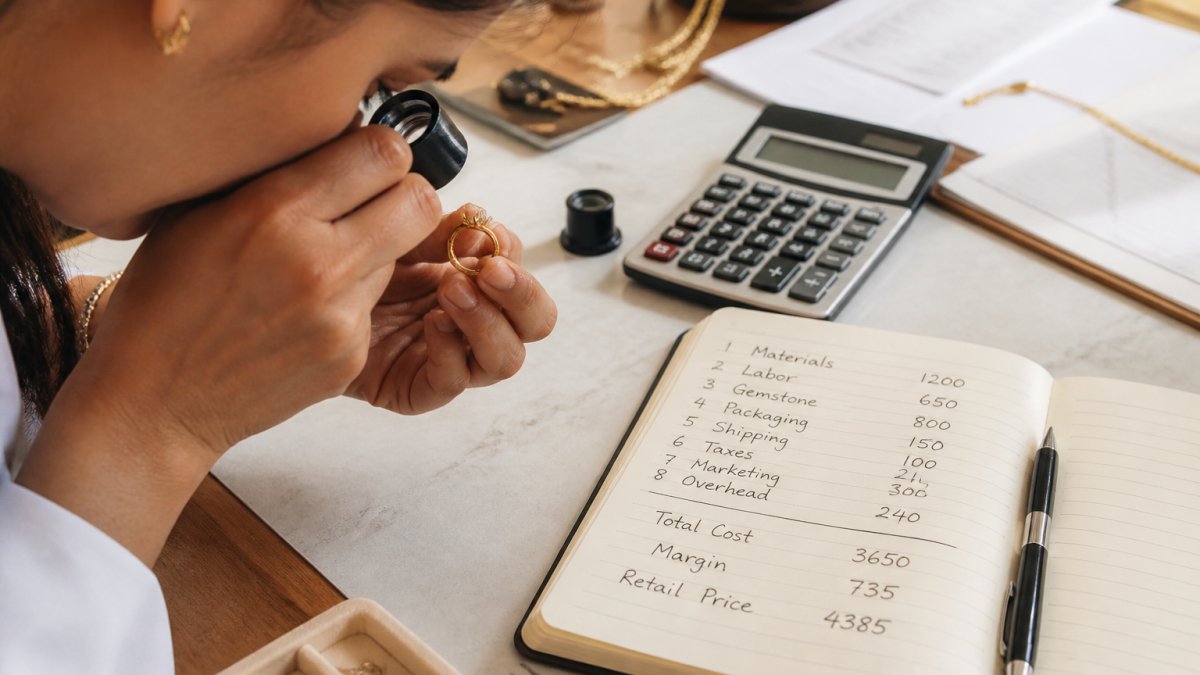
A practical test: ask a brand what share of the retail price goes to labor and to sourcing compliance, and whether those figures are estimates or audited.
When Ethical Jewelry Does Not Cost More
Ethical jewelry does not always cost more. In several common situations, the responsibly sourced option is the same price or cheaper than the conventional one.
- Recycled metals. Recycled gold and recycled silver often cost the same as newly mined metal.
- Lab-grown gemstones. Lab-grown stones can cost far less than mined equivalents.
- Direct-from-maker buying. Cutting out middlemen can offset higher labor costs.
- Small-scale artisans. A local maker may beat a luxury brand on price at equal quality.
This is the angle most articles skip. The premium is not universal. It shows up most in mined diamonds and in large luxury brands, and it shrinks or vanishes elsewhere.
Affordable Ethical Jewelry Brands: What to Look For
Affordable ethical jewelry brands exist, but "affordable" and "ethical" together require you to check the details rather than the price tag alone.
Look for these signals:
- Origin disclosure. The brand names where its metals and stones come from.
- Supplier standards. Written rules for the workshops it uses.
- Recycled or alternative materials. Recycled gold, recycled silver, or lab-grown gemstones.
- Repairability. A brand that offers repairs expects you to keep the piece.
- Honest language. No vague claims about "doing good" without specifics.
What most guides miss is that price alone tells you nothing. A cheap piece can be ethical, and an expensive one can be conventional with good marketing. The paperwork is what separates them.
Glamorous by Katre specializes in natural pearls, gemstones, and precious metals, offering pieces meant to be worn for a lifetime rather than a season. This focus on exquisite craftsmanship and timeless designs addresses the "is it worth it" question.
Ethical Jewelry Certifications and How to Verify Claims
Ethical jewelry certifications are third-party checks that confirm a specific claim about a specific piece. They matter because self-declared ethics are worth very little on their own, and because the words on most product pages are not tightly regulated. The Federal Trade Commission's guidance on environmental marketing claims is the reason you cannot assume "ethical," "sustainable," or "responsible" means anything specific when a brand uses it.
Here are the frameworks you are most likely to encounter, and what each one actually covers:
- Kimberley Process Certification Scheme. A government-backed framework aimed at keeping rough diamonds from funding conflict. It covers rough diamond trade, not labor conditions, not gemstone cutting, and not metals. The Kimberley Process overview from the U.S. State Department explains the scope.
- Responsible Jewellery Council (RJC). A membership and certification body for businesses across the jewelry supply chain, with standards covering responsible sourcing and business practices. Certification applies to the member's operations, not automatically to every item it sells.
- Fairmined and Fairtrade gold. Certification standards focused on artisanal and small-scale gold mining, including fair pricing and community development requirements. These apply to specific gold, not to a whole brand.
- SCS Global Services and similar third-party certifiers. Independent auditors that certify recycled content, responsible sourcing, or sustainability claims against published standards. The value is in the standard and the audit, not the logo.
- Lab-grown diamond grading. Reports from independent gemological laboratories describe the stone's characteristics. A grading report is not an ethics certification, it tells you what the stone is, not how it was made or who made it.
What certifications do not guarantee is just as important. A certification can cover one facility, one material stream, or one product line while the rest of a brand's catalog sits outside it. A logo on a product page is not proof that the item you are buying is covered. And no certification replaces asking a brand direct questions about the specific piece in your cart.
Verification steps that work:
- Ask for the certification name and the issuing body. "Certified" alone is not an answer.
- Check that the certifier is independent and not owned or controlled by the brand.
- Confirm the scope. Does the certification cover this material, this factory, or this specific piece?
- Request chain of custody for the item, not a general statement about the brand.
- Look for origin disclosure on the stone or metal itself, not just the collection.
- Get any fair trade or responsible mining claim in writing, with the standard named.
The U.S. Department of Labor's information on child labor and forced labor is a useful starting point for understanding labor conditions in global supply chains, and it can help you ask sharper questions about where a piece was made.
How to Buy Ethical Jewelry: A Step-by-Step Approach
How to buy ethical jewelry comes down to asking better questions before you pay, not after. Use this sequence.
- Define your budget and quality level first. Compare like for like.
- Pick your material. Recycled gold and lab-grown stones usually cost less.
- Ask for origin disclosure. Where did the metal and stones come from?
- Request the certification name. Then verify who issued it.
- Check repairability. Can the brand fix it in five years?
- Read the return policy. Buying online means you need an exit.
- Compare cost per wear, not sticker price. A piece worn weekly for a decade beats a cheap one worn twice.
That last step changes the math more than anything else. A higher upfront price spread across years of wear is often the cheaper choice.
Total Cost of Ownership: Why Ethical Jewelry Often Wins Long-Term
Total cost of ownership is where ethical jewelry wins. Upfront price is only one number. Durability, repairability, and resale value decide what a piece really costs you.
A conventional piece that tarnishes, breaks, or goes out of style in two years has a high cost per wear. A well-made piece you repair instead of replace keeps dropping in cost every year you own it.
- Durability means fewer replacements.
- Repairability extends the life of the piece.
- Resale value is stronger for solid metals and quality stones.
- Cost per wear is the number that actually matters.
So does ethical jewelry cost more? Sometimes. But over the life of the piece, it frequently costs less.
Frequently Asked Questions
Does ethical jewelry always cost more than conventional jewelry?
No. Ethical jewelry cost varies widely. Pieces made with recycled metals or lab-grown gemstones can match or beat conventional prices because they skip expensive mining steps. Artisan-made pieces with traceable stones often carry a premium, but that premium reflects fair wages, safer working conditions, and supply-chain transparency rather than just the materials.
What are some affordable ethical jewelry brands?
Look for brands that use recycled metals, lab-grown gemstones, or clearly traceable materials. Many smaller studios keep prices accessible by selling directly online and skipping wholesale markups. Check for certifications like Fairmined or SCS Global Services, and read origin disclosures. Affordable ethical jewelry brands often publish detailed sourcing information on their websites, which makes verification easier.
How can I tell whether a jewelry brand's ethical claims are credible?
Ask for specifics: which mine or supplier the metal came from, what certification the stones carry, and whether the brand publishes a chain of custody. Certifications like Fairmined, Fairtrade, and Responsible Jewellery Council membership are verifiable. If a brand cannot name its suppliers or show third-party audits, treat the claim as marketing until proven otherwise.
Are recycled metals and responsibly sourced gemstones more expensive?
Not always. Recycled gold and silver often cost the same as newly mined metal because the refining process is similar. Responsibly sourced gemstones can carry a premium when they are fully traceable from small-scale mines, but lab-grown alternatives usually cost less. The price difference depends on the specific material, origin, and level of traceability you want.
The real challenge is not the price tag. It is finding a maker who can prove where the materials came from and stands behind the piece for years. At Glamorous by Katre, we build jewelry from natural pearls, gemstones, and precious metals, with craftsmanship meant to last a lifetime and designs inspired by cultures around the world. If you want pieces you can wear daily and keep for decades, search Glamorous by Katre and find the one that fits your life.